
July 21, 2026
Grid Plastic Pallets vs. Solid Plastic Pallets: Which Is Better?
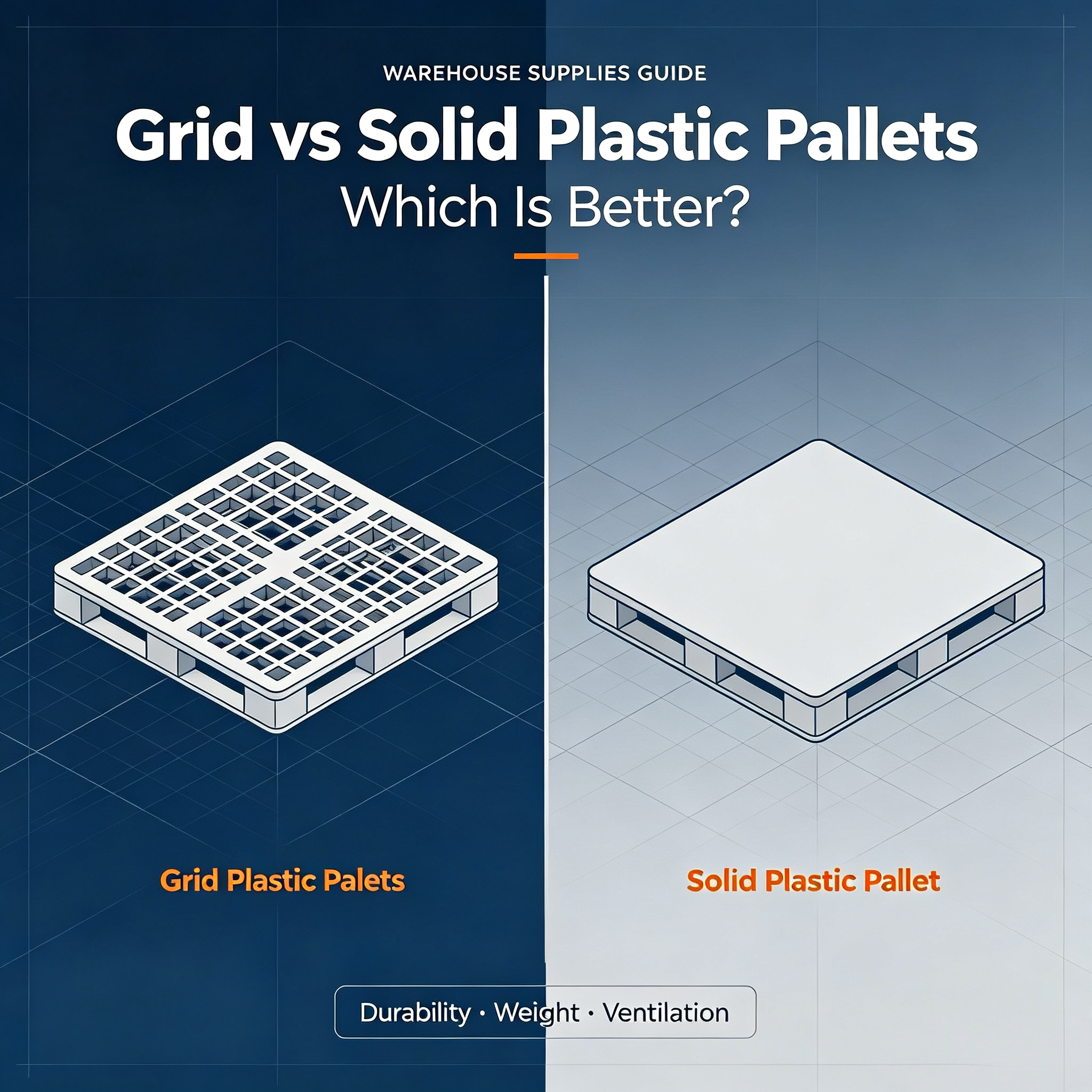
Table of Contents
1. Introduction
2. What Exactly Are We Looking At?
3. The Load Path Difference Nobody Talks About
4. Cost Breakdown: More Than Just the Sticker
5. Where Each One Shines (And Where They Don't)
6. Real-World Example: A Seafood Processor's Switch
7. Side-by-Side Comparison Table
8. Frequently Asked Questions
9. Final Take
Introduction
So you're in the market for plastic pallets, and you've hit that classic fork in the road – grid or solid deck? I get this question all the time from procurement guys and warehouse managers, and honestly? There's no one-size-fits-all answer. But after spending years in this industry, watching pallets fail in some operations and thrive in others, I can tell you the decision comes down to a few things most sales brochures won't mention.
Let's cut through the noise.
What Exactly Are We Looking At?
A solid plastic pallet – sometimes called a flat deck pallet – has a fully closed top surface. No holes, no gaps. Just one continuous piece of plastic across the deck. Think of it like a tabletop.
A grid plastic pallet – also called vented or open deck – has an open design with square holes, slotted openings, or honeycomb patterns across the surface. You can see right through it in some places.
That's the obvious difference. Anyone can spot that from across the warehouse floor.
But here's where it gets interesting. The real distinction isn't what you see – it's how these two designs behave over time inside your actual operation. And that's where most buyers get caught off guard.
The Load Path Difference Nobody Talks About
This is the part that rarely shows up in product catalogs, but it's the one that'll save you from a costly mistake.
A flat pallet doesn't rely on individual ribs to carry weight. The entire deck works together to spread point loads into surface loads. What does that mean in plain English? If your load isn't perfectly centered – and let's be honest, when is it ever? – a solid deck pallet stays stable. Even when the weight is concentrated in one area or the bottom of your product is uneven, that pallet holds up.
Grid pallets work differently. The load path goes: cargo → grid beams → local ribs → runners or feet. There's no continuous deck layer acting as a buffer. This means grid pallets are more susceptible to what we call creep deformation – that gradual sagging over time when they're under constant load, especially in racking.
I've walked into warehouses where grid pallets were sagging after 18 months on the rack, and the facility manager had no idea why. Same material, same HDPE, but the structural difference caught up with them.
That said, grid pallets have their own advantages. The grid structure can reduce weight by 30% to 50% compared to solid pallets. That's not trivial – lighter pallets mean lower shipping costs, less fuel consumption, and easier handling for your forklift operators. Plus, the open design allows for air circulation and drainage, which is a game-changer in certain environments.
Cost Breakdown: More Than Just the Sticker
Let's talk money, because that's usually where the conversation starts.
Grid plastic pallets are cheaper upfront. Period. The open design uses less raw material, so the price tag is lower. We're typically looking at a 10% to 15% price difference compared to solid deck pallets. For a large-scale operation buying thousands of pallets, that adds up fast.
But – and this is a big but – you need to look at total cost of ownership, not just purchase price.
Solid pallets are heavier because they use more material. That means higher shipping costs every time you move them. Grid pallets, being 20% to 30% lighter, can reduce transportation costs significantly. If you're shipping pallets across the country or internationally, that weight difference really matters.
On the flip side, solid pallets typically have better static load-bearing capacity – up to 4 to 6 tons – because of their uniform force distribution. Grid pallets, while lighter, generally max out around 1.5 to 3 tons for dynamic loads. If you're storing heavy equipment or dense products, that capacity difference could force you into solid pallets regardless of the upfront savings.
Where Each One Shines (And Where They Don't)
Choose grid plastic pallets if:
l You're in food processing, agriculture, or seafood – anywhere drainage and ventilation matter
l You're dealing with wet environments or cold storage where moisture is a concern
l You need to minimize weight for shipping cost reasons
l Your turnover is high and pallets are constantly in motion (better dynamic load performance)
l Cost control is a critical factor
Grid pallets excel in cold chain environments. The open design prevents icing and adhesion between stacked pallets, which is a huge problem with solid decks in freezer conditions. I've seen frozen goods literally stick to solid pallets – not fun to deal with.
Choose solid plastic pallets if:
l You're storing heavy loads or using automated storage and retrieval systems (AS/RS)
l Hygiene is your top priority – pharmaceutical, food-grade, or chemical applications
l Your pallets will spend significant time on racking (better creep resistance)
l You need to contain small items or liquid containers that could fall through grid holes
l You're willing to pay more upfront for long-term durability
Solid pallets are the go-to for automated warehouses. Why? Because automated systems expect consistent, predictable pallet behavior. A grid pallet's slight flex or sag can throw off sensors and create jams. Trust me, you don't want to be the guy explaining why your AS/RS went down because of a pallet issue.
Real-World Example: A Seafood Processor's Switch
I worked with a seafood processing plant up in the Pacific Northwest a couple years back. They were using solid plastic pallets across their entire operation – cold storage, processing, shipping – the works.
And they were having problems.
The solid decks were trapping water during washdowns. Even with drying racks, moisture would accumulate in the corners and around the edges. Over time, that created bacterial concerns. Their quality control team was constantly swabbing pallets and finding issues.
They switched to grid plastic pallets for their wet processing areas.
The difference was immediate. Water drained straight through. Air circulation kept the pallets drier between uses. The open grid design also improved ventilation for their seafood products during storage. They cut their cleaning time by about 40% because high-pressure rinsing was more effective with the grid design.
The kicker? They kept solid pallets for their dry storage and shipping areas. Best of both worlds.
This is the kind of nuance that gets lost when people treat this as a simple "which is better" question. It's not about better – it's about fit.
Side-by-Side Comparison Table
Factor | Grid Plastic Pallet | Solid Plastic Pallet |
Deck surface | Open, vented | Fully closed |
Weight | 20-30% lighter | Heavier |
Static load capacity | 4-6 tons (with reinforcement) | 4-6 tons |
Dynamic load capacity | 1.5-3 tons | Typically higher |
Racking suitability | Must verify; prone to creep | Very suitable |
Hygiene | Drains well; gaps trap debris | Easy to clean; no gaps |
Ventilation | Excellent | Poor |
Price | 10-15% lower | Higher |
Best for | Wet environments, cold storage, high turnover | Heavy loads, automated systems, hygiene-critical |
Frequently Asked Questions
Q: Can I use grid pallets in racking systems?
You can, but you need to verify the specifications carefully. Grid pallets are more susceptible to creep deformation over time when stored in racking. Solid pallets generally perform better in racking because the continuous deck distributes weight more evenly. If you're putting grid pallets in racking, look for reinforced designs with steel pipe inserts.
Q: Which one is easier to clean?
Solid pallets are easier to clean for most applications. The smooth, closed surface doesn't trap debris. Grid pallets can be more challenging because debris gets caught in the gaps. That said, grid pallets drain water more effectively during washdowns. For seafood or produce processing, that drainage advantage often outweighs the cleaning hassle.
Q: Are grid plastic pallets food-grade safe?
Yes, provided they're made from food-grade HDPE or PP materials. Grid pallets are actually preferred in many food applications because the ventilation helps prevent moisture buildup and mold. Just make sure you're buying from a supplier that certifies their materials for food contact.
Q: How long do plastic pallets typically last?
A well-made plastic pallet can last 8 to 15 years, compared to 2 to 3 years for wood. Grid pallets may have slightly shorter lifespans in high-load applications due to creep, but in the right environment, they'll easily outlast wood many times over.
Final Take
Look, here's the bottom line.
Grid plastic pallets win when you need ventilation, drainage, weight savings, and cost efficiency. They're the workhorse of the food industry, cold chain logistics, and any environment where moisture is a factor.
Solid plastic pallets win when you need maximum hygiene, heavy load capacity, racking stability, and long-term durability in demanding conditions.
Neither is universally superior. The right choice depends entirely on your operation – your products, your environment, your equipment, and your budget.
The global plastic pallets market was valued at over $8 billion in 2025 and continues to grow. More companies are making the switch from wood every year, and for good reason – the total cost of ownership for plastic pallets is significantly lower when you factor in lifespan and reduced product damage.
But don't just pick one because someone told you it's "better." Do the math for your specific operation. Test pallets in your actual environment. Talk to your operators – they're the ones handling these things every day.
And if you're still not sure? Run a pilot. Get a few of each, put them through their paces in your warehouse, and see which one actually performs. That's how you make the right call.